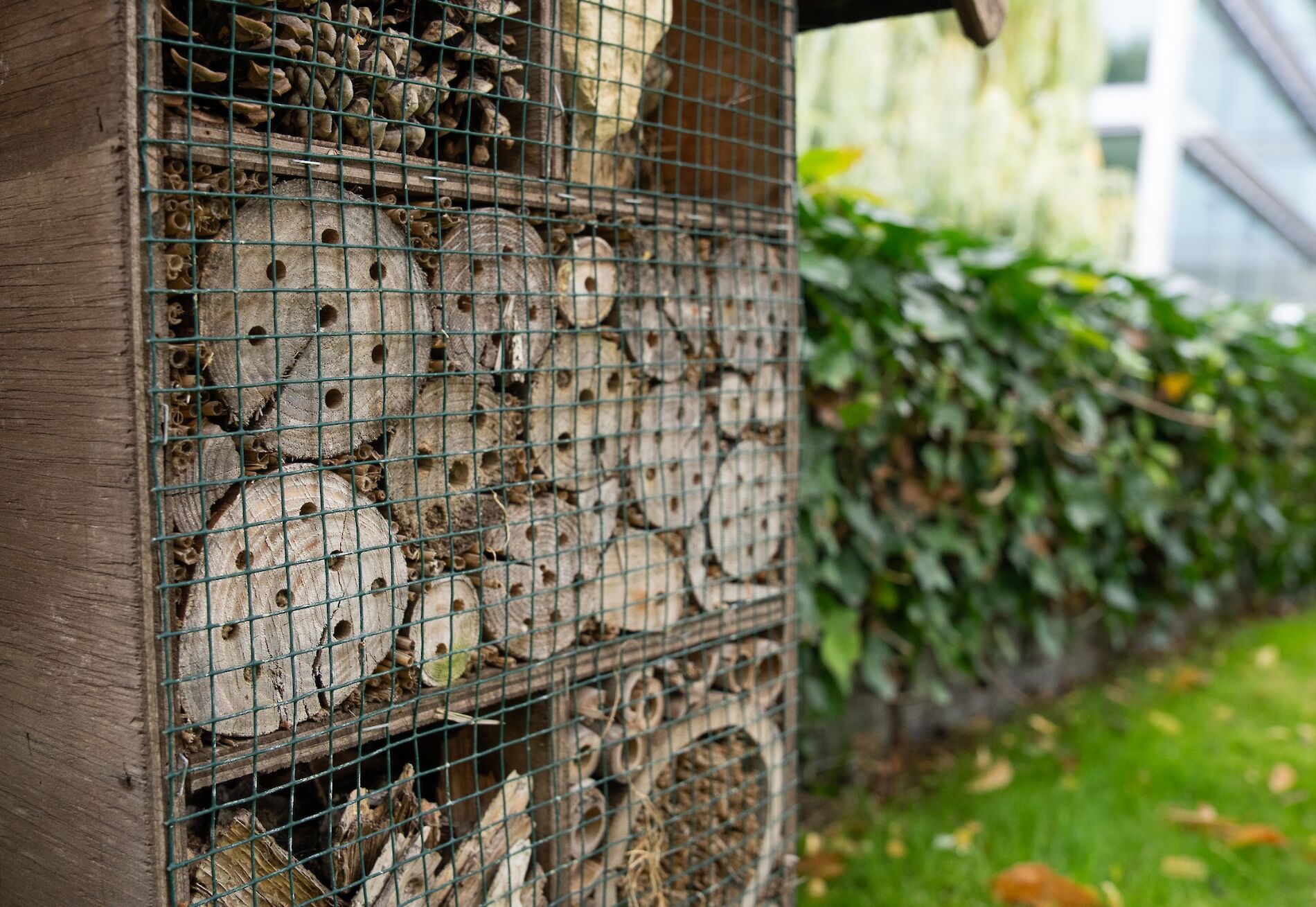
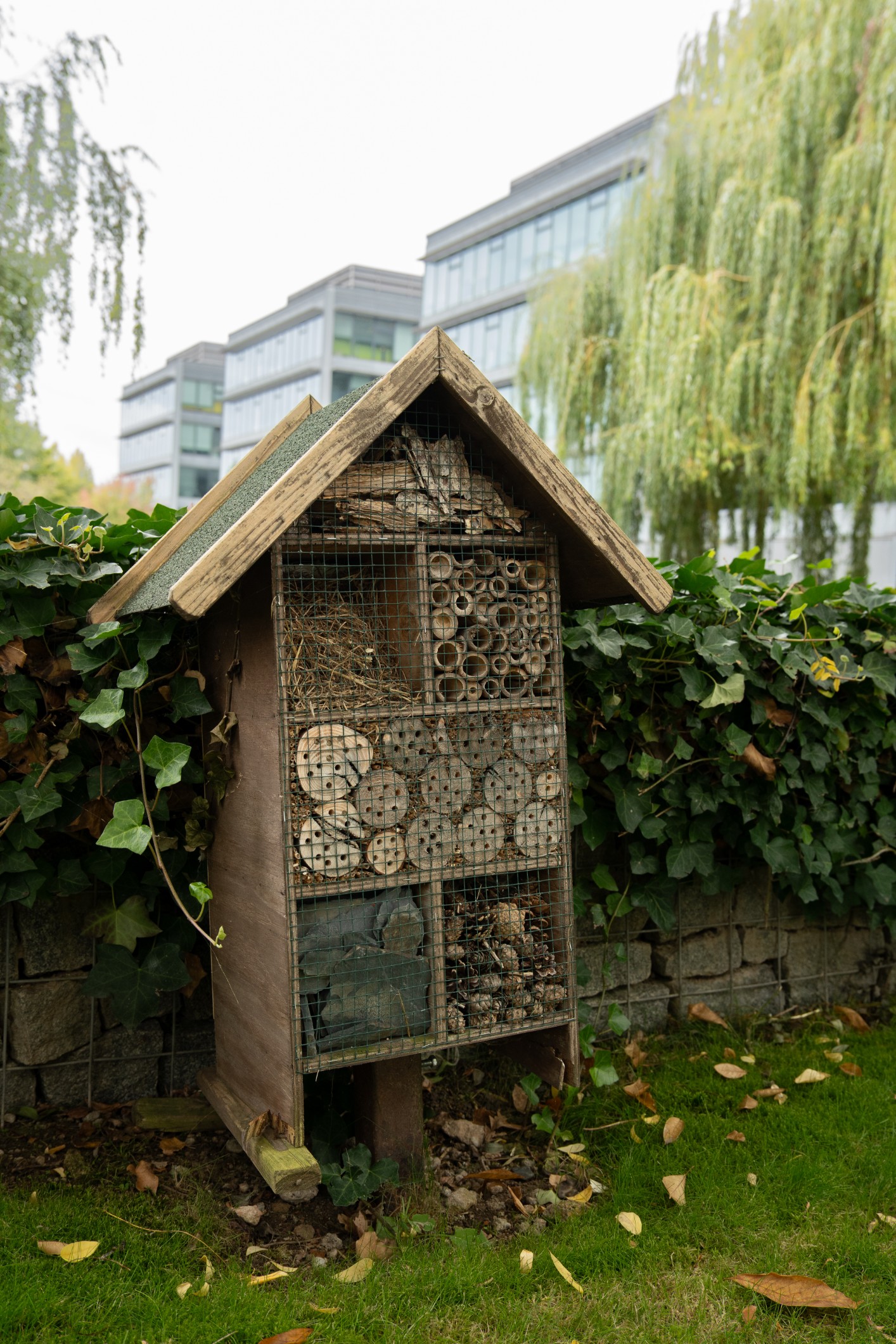
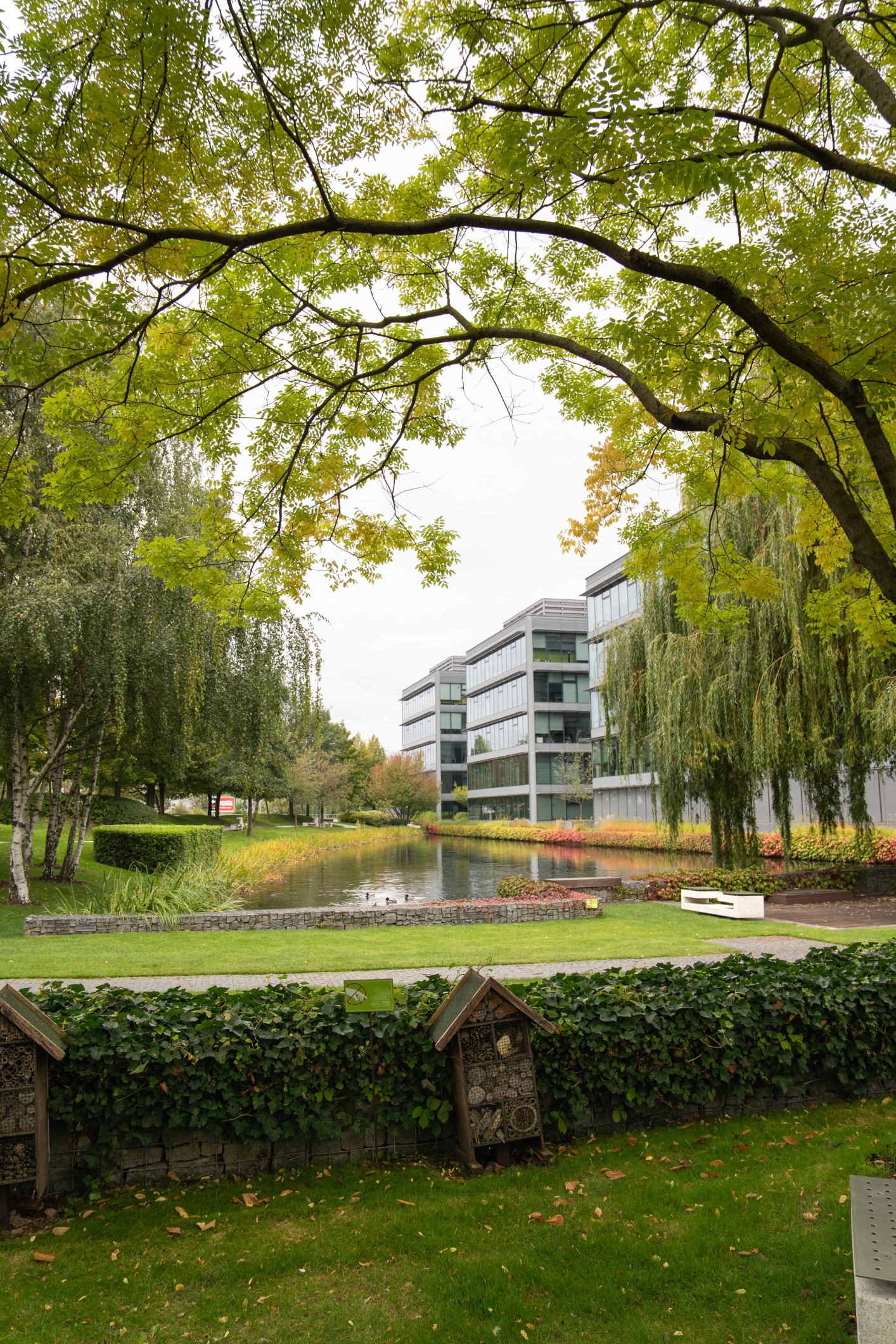
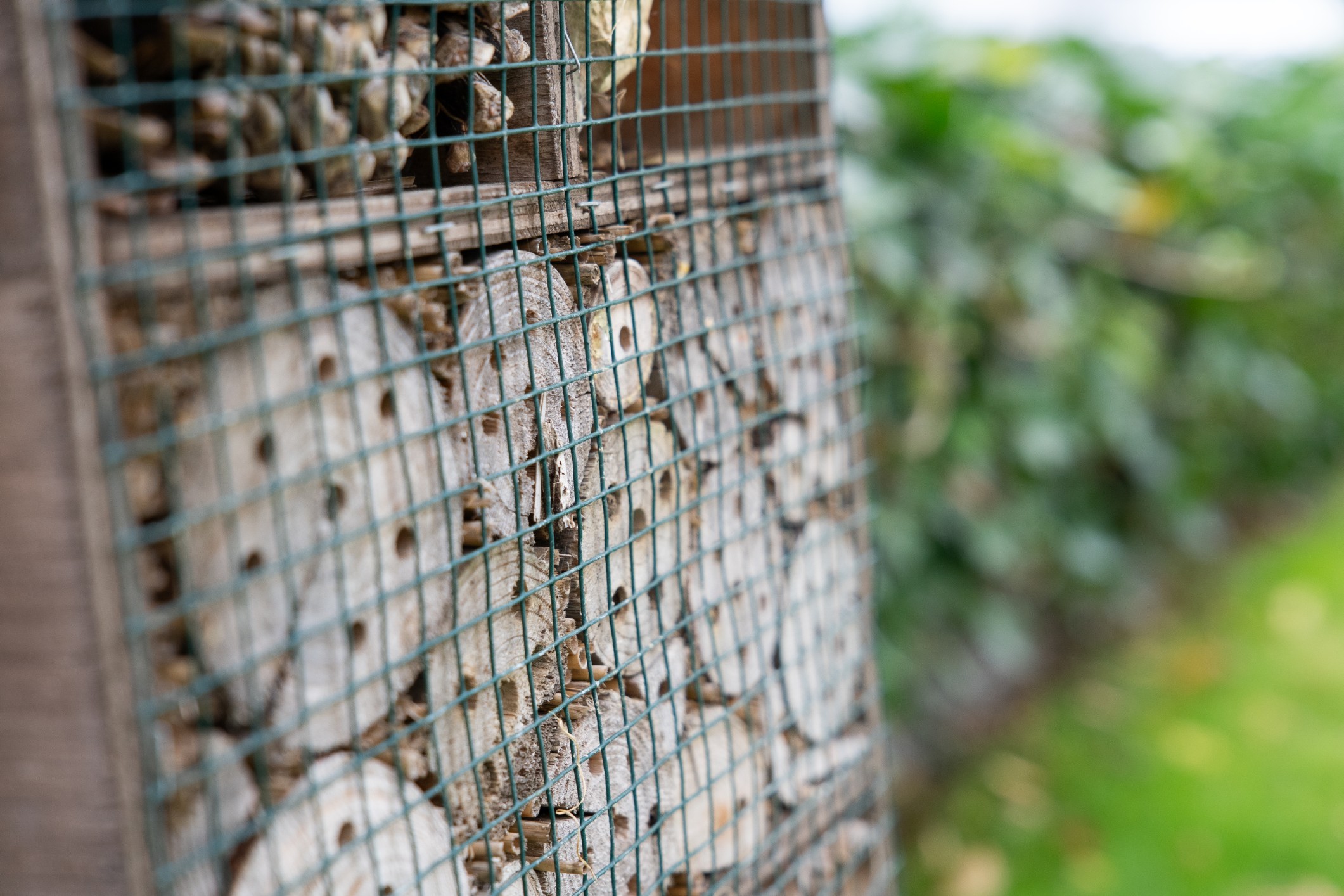
You may have noticed, while walking through the grounds, some wooden "houses" fitted with rows of holes, small cavities, and compartments. These are not decorative features — they are what are known as insect hotels: specially designed shelters for solitary bees, bumblebees, butterflies, ladybirds, and other beneficial insects. We often barely notice these tiny creatures, yet they are among the most important inhabitants of our landscape: they take care of pollinating plants, regulating pests, and maintaining the balance of the entire ecosystem.
Bees Are Not Just About Honey
When most of us hear the word "bee," we picture hives full of honey and busy worker bees. Honeybees do indeed live within The Park grounds — you can find them in the hives on the building's rooftop. However, they represent only a fraction of the bee kingdom. Alongside them exist hundreds of species of so-called solitary bees. These have no queen and no worker bees — each female looks after her own offspring entirely on her own. And it is precisely for them that insect hotels are so important: they replace the natural cavities in wood and plant stems that are so often absent from modern landscapes.
Interestingly, while the honeybee will visit almost any flower, many solitary species are highly specialised — some dozens of species, for example, are dependent on just a single plant species or family. Without their presence, certain flowers would be unable to reproduce and would disappear from our natural world altogether.
How Insect Hotels Work
Inside the structures you will find hollow stems, drilled wooden blocks, pieces of bark, and bricks with pre-drilled holes. Female bees pack these spaces with stores of pollen and nectar, into which they lay their eggs. They then seal the cavity with a thin partition. The larvae develop throughout the summer, pupate, and overwinter — often for as long as 11 months — before emerging as new adults the following spring. Certain species of wasps, which are also welcome guests in insect hotels, deposit paralysed prey rather than pollen. All of them, however, share the same principle: a safe shelter that allows them to complete their life cycle.
The Right Placement Is Key
For an insect hotel to truly function, placement matters. According to the principles of "insect feng shui," it should face south or south-east, be exposed to sunlight, and be positioned at least one metre above the ground. Shaded spots tend to suit solitary wasps better, but solitary bees need the warmth of the sun's rays. The surrounding environment matters too: rather than a closely mown lawn, insects thrive near a flowering meadow rich in diverse plant species — such as lavender, rudbeckia, sage, or sunflowers.
Small Helpers in the Garden
Beyond bees and wasps, insect hotels can also provide shelter for seven-spot ladybirds and lacewings, which prey on aphids, as well as butterflies and moths that pollinate flowers during the evening hours. Many of these species pose no danger whatsoever — on the contrary, they are enormously beneficial to our gardens and urban green spaces.
Care and Maintenance
Just like a hotel for humans, an insect hotel needs occasional upkeep. At the end of the season — typically in September — it is advisable to clean out empty cavities and remove any residual material. Should mould, mites, or the larvae of parasitic flies take hold inside, the next generation of bees can be put at risk. Experts also recommend replacing the wooden blocks with fresh ones approximately every two years.
By installing insect hotels, The Park affirms its commitment to the principles of sustainability and biodiversity. Together with the rooftop beehives, we are creating an environment where honeybees and their wild relatives can coexist side by side — supporting the diversity of life and demonstrating that even a modern office campus can be a welcoming place for nature.
👉 Next time you walk past an insect hotel, take a moment to stop and observe its tiny residents. You might spot a bee carefully sealing up a cavity, or a ladybird seeking shelter. You will find that even the smallest of creatures can play an enormous role in our world.